
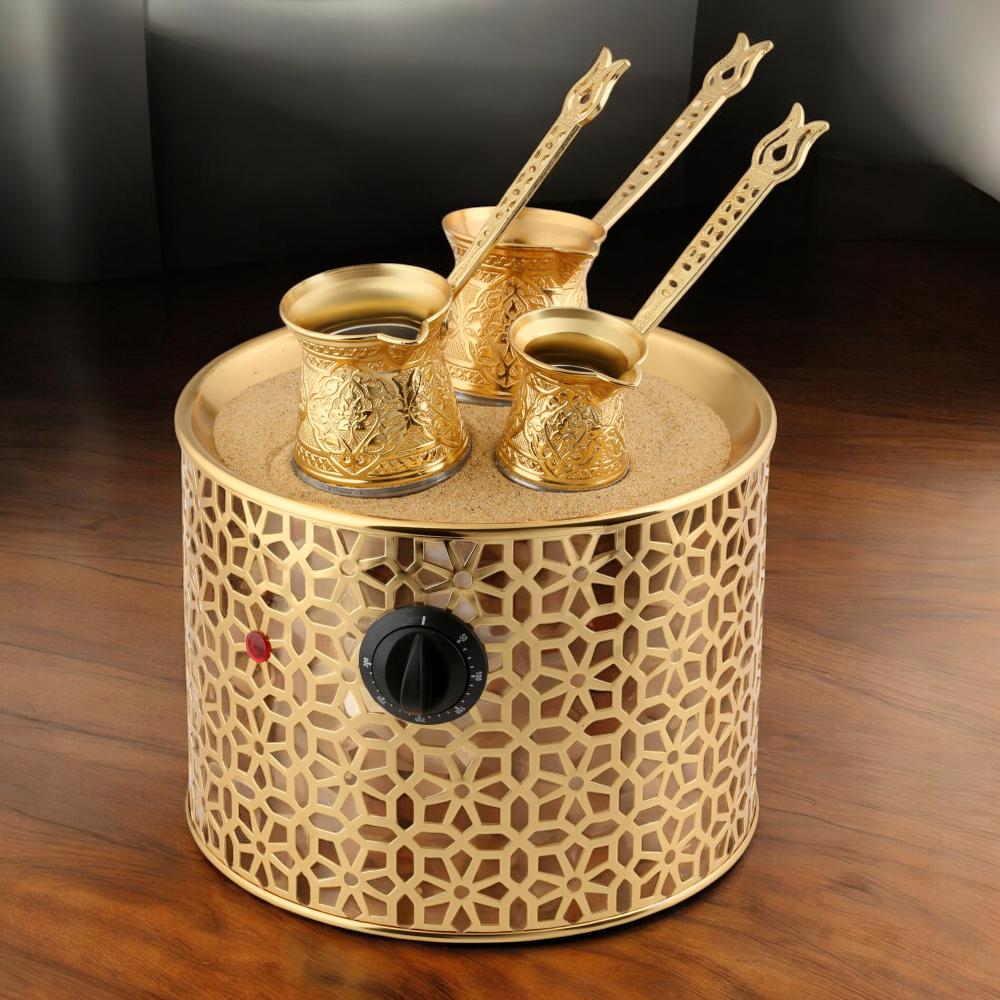
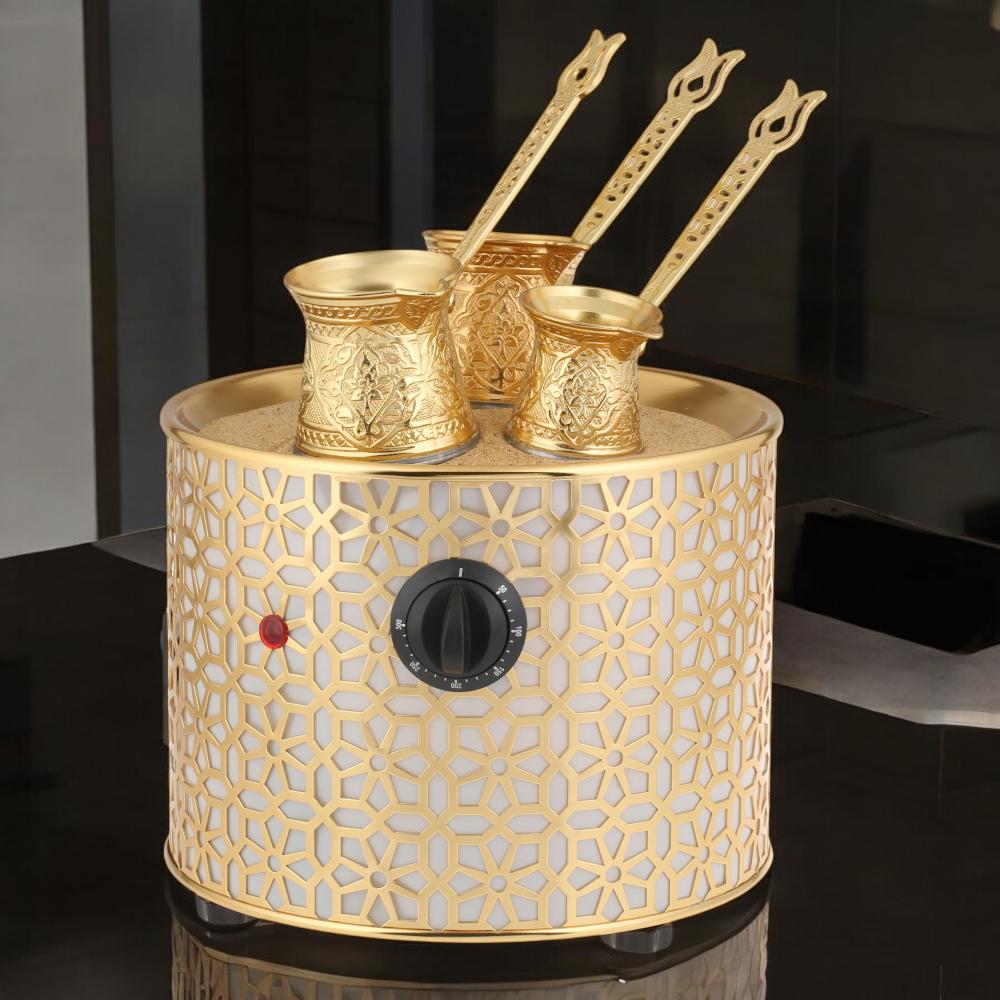
Copper Sand Coffee Maker with Decorative Lighting Inside And Golden Color - Prepares the Perfect Turkish Coffee in 5 Minutes
- Fully Original Copper.
- Electric Plug: UK - Gulf Countries (depending on the country of order).
- Can be used to prepare coffee, espresso, tea, Nescafé, and more.
- Healthy and Safe, High-Quality Copper, Easy to Clean.
Specifications:
- Type: 1000 Watts (110 ~ 220 Volts) for use in homes, cafes, and restaurants.
- Material: Copper-coated.
- Package Includes: Original Copper Coffee Maker, Three Sand Bags, and Copper Coffee Pots in Three Sizes (Jazwah).
- Dimensions: Small: 30 cm × 30 cm × 22 cm (11.8 inches × 11.8 inches × 8.6 inches).
Notes:
- The sand coffee maker serves 1 to 6 people at a time.
- Electric Plug: UK - Gulf countrıes, Frequency: 50 ~ 60 Hz.
- Sand can be used continuously.
- Adjustable Temperature Controller from 0°C to 300°C.
- Due to ambient lighting, the color may vary slightly.
- To avoid shipping delays, please share your mobile number after completing your order for the shipping company.
- Shipping via (SMSA - Aramex).
For any inquiries, feel free to contact us.
A Short Story About Coffee:
According to one of the legends, the refreshing effect of coffee beans was first discovered by an Ethiopian goat herder named Kaldi, who noticed that his goats became more energetic after eating small red berries. He told the monks living nearby, and they discovered that by roasting the beans, they could make a delicious drink. Another story claims that a Persian doctor named Al-Razi was the first to use coffee ("qahwa") as a stimulant and mentioned it in his work Kitab al-Mansuri. Coffee was first cultivated in Yemen on terraced farms. The habit of drinking coffee spread quickly through Muslim pilgrims to Mecca and Medina, and later, coffee cultivation spread to other Arab countries and Egypt, where drinking coffee (or qahwa) became a daily tradition. In the 16th century, European travelers and botanists visiting the Middle East brought news of this previously unknown plant and the drink made from its fruit. Merchants quickly recognized the potential of the new beverage, and the first bags of coffee beans arrived in Venice in the early 17th century. This was when Europeans began to learn about coffee. The news of coffee arriving in Venice spread rapidly, and Dutch traders soon showed interest in cultivating and trading coffee. Thanks to European travelers and monks, coffee made its way around the world and quickly became very popular.